
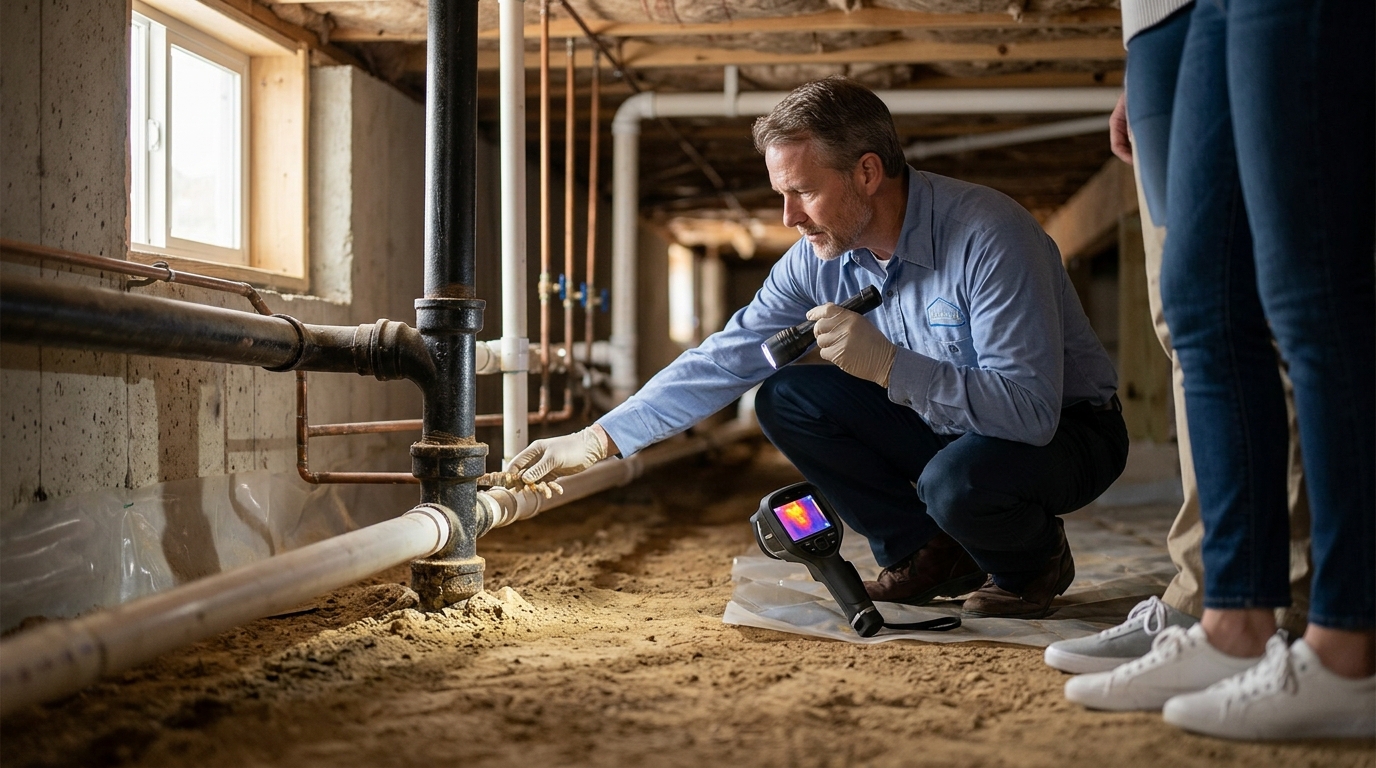
If you are buying a home in Fort Collins or anywhere in Northern Colorado, plumbing should be near the top of your worry list. Leaky pipes, corroded fittings, and failing water heaters can quietly turn a dream home into a money pit. The good news is that a qualified home inspector evaluates every visible and accessible plumbing component during a standard inspection. But what exactly can an inspector catch, and where do the limits begin? Below, we break down what a comprehensive home inspection covers when it comes to plumbing, what falls outside the scope, and how add-on services fill the gaps.
What Home Inspectors Check in the Plumbing System
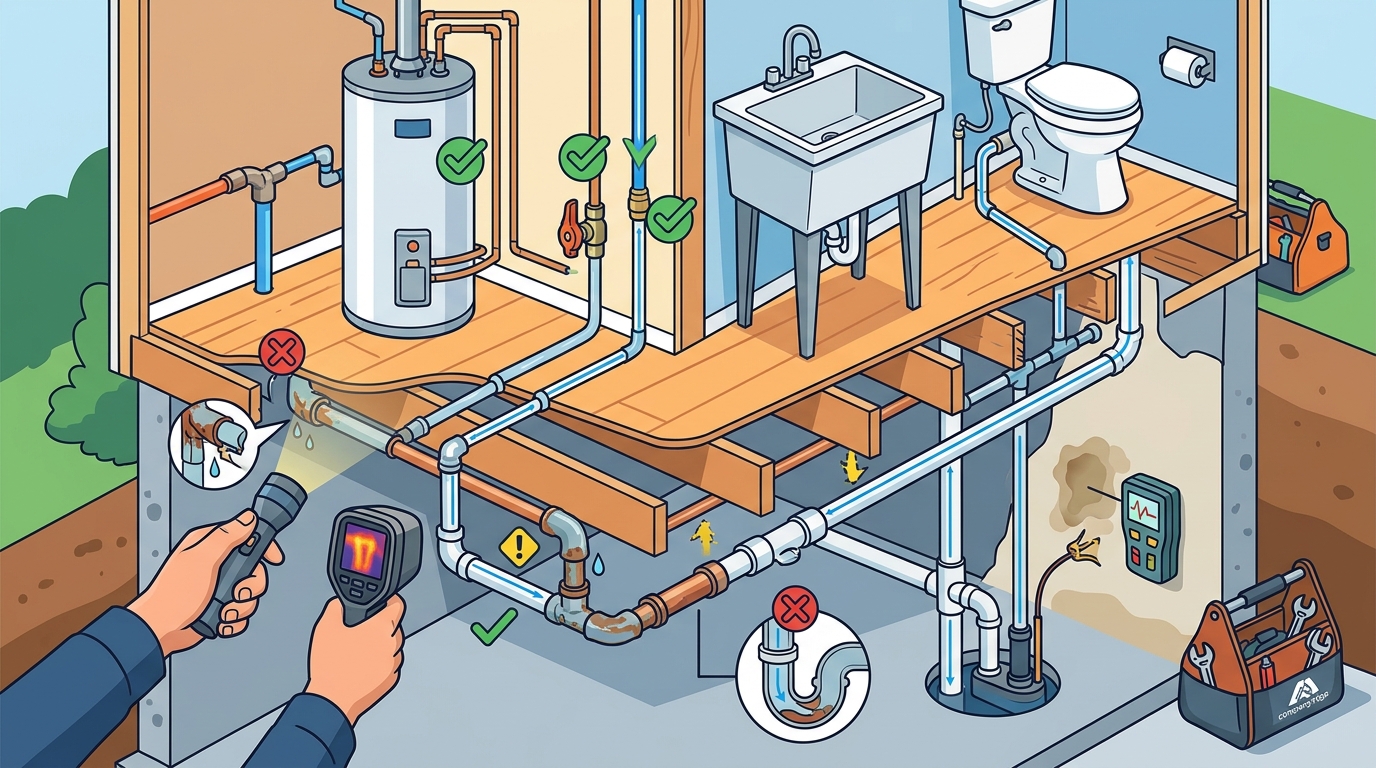
A residential home inspector is a trained professional who evaluates the visible and accessible components of a home and provides an objective opinion on its current condition. During the plumbing portion, the inspector operates every fixture in the house, including sinks, tubs, showers, toilets, and drains. Water heaters, visible supply and drain piping, sump pumps, and main shutoffs are all examined.
The inspector checks water pressure, verifies that hot and cold lines are properly connected, and looks for leaks, slow drains, improper materials, and corrosion. At Foothills Home Inspections, we also note safety concerns such as improper water heater venting or missing temperature and pressure relief valve discharge pipes.
Major Plumbing Problems an Inspector Can Identify
Many significant plumbing defects are detectable during a thorough home inspection. Here are the most common issues inspectors flag:
Leaks and Water Damage
Inspectors look for active drips under sinks, around water heaters, and at visible pipe connections. Staining on walls, ceilings, or floors often reveals past or ongoing leaks. Even brand-new homes are not immune to plumbing leaks, which is why every property deserves a close look.
Outdated or Problematic Pipe Materials
Polybutylene is a type of plastic resin that was used in homes built between 1978 and 1995 as a cheaper alternative to copper. Oxidants like chlorine in public water supplies can cause this material to become brittle, leading to micro-fractures and potential system failure. Galvanized steel pipes, common in homes built before the 1960s, can corrode internally and introduce lead into the water supply. A skilled inspector identifies these materials and recommends further evaluation.
Water Heater Deficiencies
Common water heater issues found during inspections include undersized units, high water pressure, sediment buildup, and internal rust. Gas-fired units are checked for proper venting to ensure carbon monoxide is safely routed outdoors.
Functional Drain Problems
Running water through every drain helps detect slow drainage and potential clogs. Gurgling sounds from drains or toilets can indicate a blocked vent stack or a developing sewer line issue.
Known Limitations of a Standard Plumbing Evaluation
A home inspection is a visual, non-invasive assessment. Inspectors cannot open walls, dig up underground pipes, or disassemble fixtures. A standard home inspection identifies visible issues in the plumbing system but cannot assess hidden problems behind walls or beneath floors without causing damage.
Sewer lines, in particular, are a blind spot. These underground pipes carry wastewater to municipal systems, and issues such as tree root intrusion, cracks, or improper installation are impossible to detect with a visual evaluation alone. That is why additional services exist.
Why a Sewer Scope Inspection Matters
A sewer scope inspection is a specialized evaluation that uses a small camera attached to a flexible tube to visually inspect the interior of sewer lines. The inspector views the live video feed and documents any clogs, cracks, bellies, or root intrusion found along the line.
Sewer line repairs in Colorado can cost anywhere from $3,000 to $15,000 or more, depending on depth and damage. Catching these issues before closing gives buyers real negotiating power. Foothills Home Inspections offers sewer scope inspections as an add-on service for every home inspection in the Fort Collins area.
Tools That Help Inspectors Go Deeper
Thermal imaging is a non-invasive technology that detects temperature differences behind walls, which can reveal hidden moisture or plumbing leaks. Moisture meters provide quantitative readings that confirm or rule out suspected water intrusion. These tools extend an inspector's reach beyond what the naked eye can see, adding confidence to the evaluation.
At Foothills Home Inspections, we use moisture meters and thermal imaging when appropriate to deliver a more complete picture of the home's plumbing health.
Standard Inspection vs. Specialized Plumbing Evaluation
| Feature | Standard Home Inspection | Sewer Scope Add-On | Licensed Plumber Evaluation |
|---|---|---|---|
| Visible pipe assessment | Yes | No | Yes |
| Fixture operation & leak check | Yes | No | Yes |
| Water heater evaluation | Yes | No | Yes (detailed) |
| Sewer line camera inspection | No | Yes | Sometimes |
| Hidden pipe pressure testing | No | No | Yes |
| Code compliance review | General observations | No | Yes |
| Typical cost (Northern CO) | Included in inspection | $150 - $250 | $200 - $400+ |
Key Takeaways
- A qualified home inspector can identify many major plumbing problems, including leaks, outdated piping, water heater defects, and drainage issues.
- Inspections are limited to visible and accessible components; hidden pipes behind walls and underground sewer lines require additional services.
- A sewer scope inspection is the best way to evaluate underground sewer lines before purchasing a home.
- Thermal imaging and moisture meters help inspectors detect hidden moisture that may indicate plumbing leaks.
- Polybutylene and galvanized steel pipes are red-flag materials that inspectors specifically look for in older homes.
- Combining a home inspection with a sewer scope provides the most complete plumbing picture for buyers.
- An inspector's role is not to pass or fail a home but to give you an objective snapshot so you can make an informed decision.
Frequently Asked Questions
Does a home inspector check all the plumbing?
An inspector evaluates all visible and accessible plumbing components, including fixtures, exposed pipes, water heaters, and shutoffs. Components concealed inside walls, beneath slabs, or underground are outside the scope of a standard inspection.
Can an inspector find hidden leaks?
Inspectors look for evidence of hidden leaks such as staining, warped materials, and musty odors. Tools like moisture meters and thermal imaging cameras can help detect moisture behind surfaces, though they cannot see through walls the way an X-ray would.
What is a sewer scope inspection?
A sewer scope inspection is a service in which a small camera is fed through the home's main sewer line to check for blockages, root intrusion, cracks, and other damage. It is not included in a standard home inspection but is available as an add-on at Foothills Home Inspections.
Should I get a sewer scope when buying a home in Fort Collins?
Yes. Many homes in Northern Colorado are decades old, and tree roots, shifting soil, and aging clay pipes can all compromise sewer lines. A sewer scope gives you clarity before you close and can save thousands in unexpected repairs.
What plumbing problems are deal breakers?
There is no universal deal breaker. However, extensive polybutylene piping, a failing sewer line, or active sewage backups are issues that often lead buyers to renegotiate or walk away. Your inspector and real estate agent can help you weigh the severity.
How much does a plumbing inspection cost in Colorado?
The plumbing evaluation is included in a standard home inspection. A sewer scope add-on typically ranges from $150 to $250 in Northern Colorado. A separate evaluation by a licensed plumber usually costs $200 to $400 or more.
Does the inspector test water quality?
Water quality testing is not part of a standard home inspection. If a home is on a private well or you have concerns about contaminants, a separate water quality test can be arranged through a certified lab.
What happens if plumbing issues are found?
The inspector documents the issue with photos and descriptions in a detailed report. Depending on severity, the report may recommend monitoring, repair, or further evaluation by a licensed plumber. Buyers can then negotiate with the seller for repairs or price adjustments. You can view a sample inspection report to see how findings are documented.
Protect Your Investment with a Thorough Inspection
Plumbing problems do not have to be a surprise. A comprehensive home inspection paired with a sewer scope gives you the clearest possible picture of a home's plumbing condition before you sign on the dotted line. Serving Fort Collins and all of Northern Colorado, Foothills Home Inspections delivers detailed, objective evaluations you can trust.
Book your home inspection today and take the guesswork out of your next home purchase.