
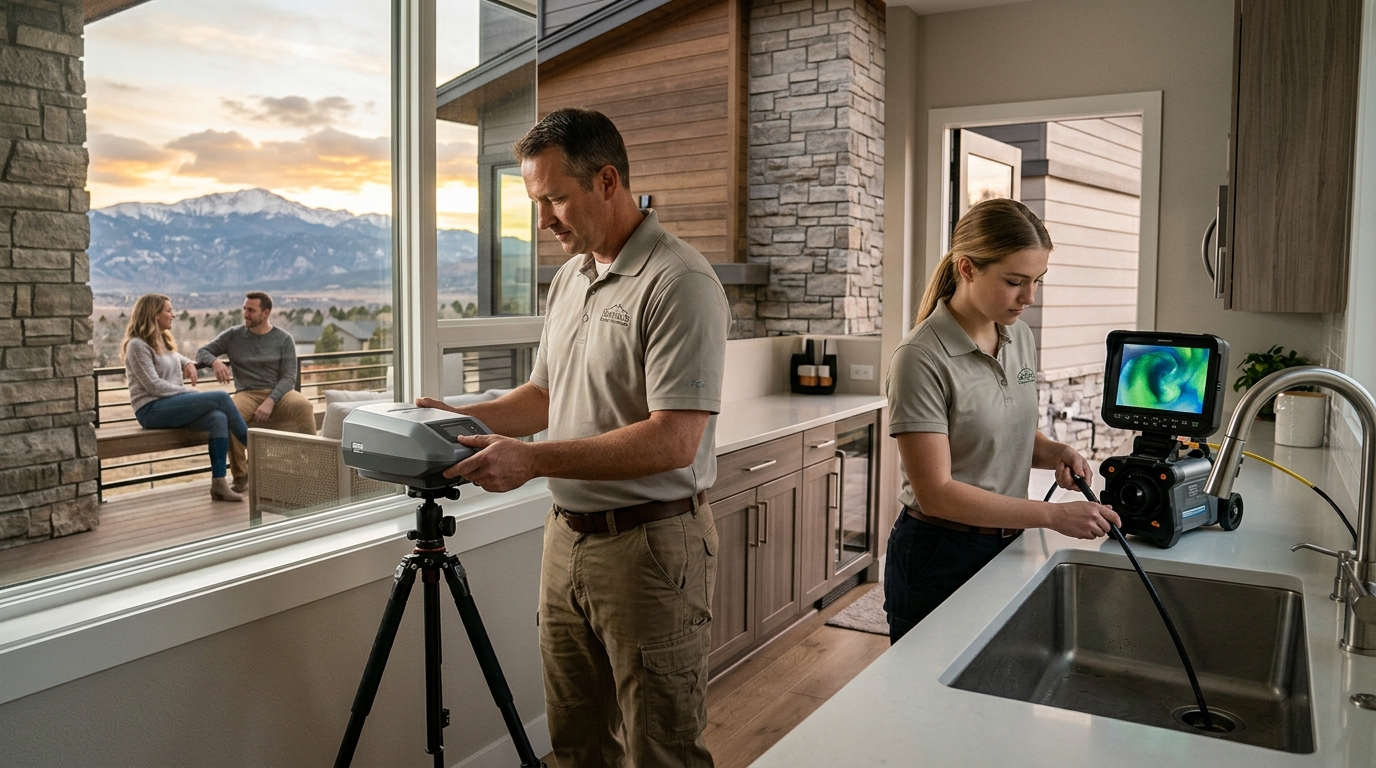
Buying a home in Northern Colorado is a significant financial milestone, but the region's unique geology and aging infrastructure introduce specific risks that standard inspections often miss. According to the United States Environmental Protection Agency, radon is the second leading cause of lung cancer in the United States, affecting millions of homes nationwide. This statistic highlights why specialized testing is not just a luxury, but a necessity for buyers in Fort Collins, Loveland, and Windsor. While a standard home inspection covers the visible and accessible systems of a property, it rarely includes deep subsurface or atmospheric analysis. This article compares two critical add-on services: Radon Testing and Sewer Scoping. Understanding the differences between these two tests will help you protect your investment from invisible hazards and costly underground failures. (About Us Foothills Home)
Understanding Radon Testing
Radon is a colorless, odorless, and tasteless radioactive gas that results from the natural decay of uranium in soil, rock, and water. It is a primary concern for homebuyers because it can seep into homes through cracks in foundations, floors, and walls. Radon testing is the process of measuring the concentration of this gas within a home's air to determine if mitigation is required. (Foothills Home Inspections Northern)
In Northern Colorado, the geological composition of the Front Range contributes to varying levels of radon potential. The American Lung Association notes that radon exposure causes approximately 21,000 lung cancer deaths each year in the United States. This data underscores the importance of early detection. A typical radon test involves placing a short-term or long-term detector in the lowest lived-in level of the home. If levels exceed the EPA action level of 4 picocuries per liter (pCi/L), a mitigation system is typically installed to vent the gas safely outdoors. (Booking Foothills Home Inspections)
At Foothills Home Inspections, we prioritize radon testing because it addresses a silent health hazard that cannot be seen or smelled. Our certified inspectors ensure that the testing protocol meets state and federal guidelines, providing you with accurate data to make informed decisions about your family's health. (Articles Foothills Home Inspections)
Understanding Sewer Scoping
While radon deals with the air you breathe, sewer scoping deals with the waste you remove. Sewer scoping, also known as sewer line inspection, involves inserting a specialized waterproof camera into the home's main sewer line to visually inspect the interior of the pipes. Sewer scoping is the diagnostic procedure used to identify blockages, root intrusion, cracks, or collapses in the underground plumbing infrastructure.
Older homes in established Northern Colorado neighborhoods often have clay, cast iron, or Orangeburg pipes that are prone to deterioration. Tree roots are particularly aggressive in this region, seeking out moisture and nutrients from sewer lines. A single root intrusion can cause significant backups, leading to sewage entering the home or costly trenching repairs to replace the line. The cost of repairing a sewer line can range from several thousand to tens of thousands of dollars, depending on the depth and location of the damage.
Our sewer scoping service provides a real-time video feed of the entire line from the house to the city main or septic tank. This allows us to identify not just current blockages, but also potential future failures. By catching issues early, we help clients avoid emergency plumbing situations and negotiate repairs before closing on a property.
Key Differences: Atmosphere vs. Infrastructure
Understanding the distinction between these two services is vital for a comprehensive home evaluation. One addresses an environmental health hazard, while the other addresses a structural infrastructure hazard. Below is a detailed breakdown of how they differ in scope, methodology, and impact.
1. The Nature of the Hazard
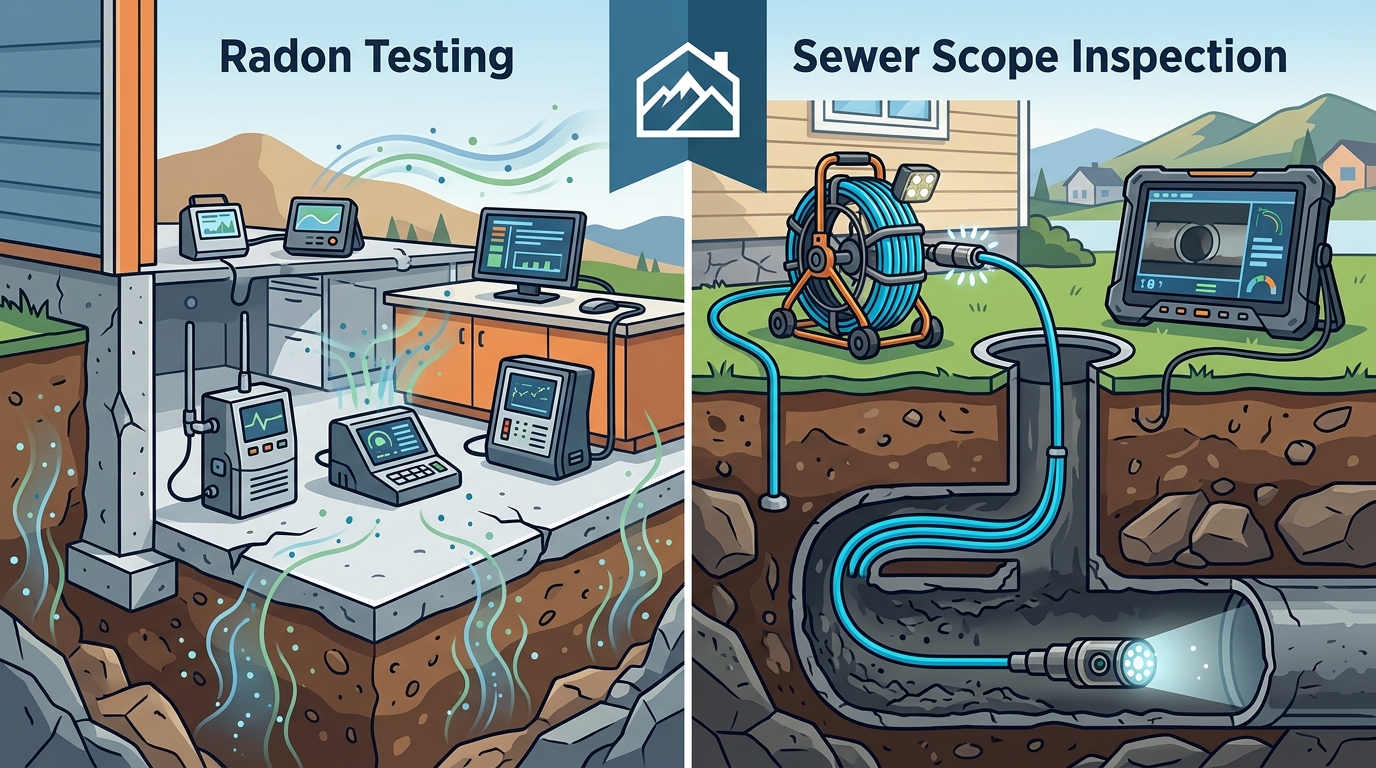
Radon is an atmospheric hazard. It exists in the soil and moves into the home through pressure differentials. It is invisible and requires specialized electronic or charcoal detectors to measure. Sewer scoping addresses a physical infrastructure hazard. The pipes are tangible, and their condition can be visually assessed through high-definition video. Root intrusion, bellies (sags) in the pipe, and offset joints are physical defects that can be mapped and located precisely.
2. Testing Methodology
Radon testing is passive or active. Short-term tests last 2 to 7 days, while long-term tests can last up to a year. The results are a numerical value (pCi/L). Sewer scoping is an active, real-time inspection. The inspector watches the video feed as the camera travels through the line. The output is a video recording and a detailed report highlighting the location and nature of any defects. This allows for immediate identification of issues that might not cause symptoms for years.
3. Mitigation and Repair
If radon levels are high, mitigation involves installing a sub-slab depressurization system, which is a mechanical solution involving pipes and fans. If sewer line issues are found, repair options include hydro-jetting, pipe lining (cured-in-place pipe), or traditional excavation. The complexity and cost of sewer repairs often far exceed the cost of radon mitigation, making early detection through scoping critical for budgeting.
Why Northern Colorado Requires Both
Homebuyers in Fort Collins, Loveland, Windsor, and Greeley face a unique set of challenges that make both radon testing and sewer scoping highly recommended. The region's rapid growth has led to a mix of brand-new construction and older, established neighborhoods with aging infrastructure.
In older homes, the sewer lines may be decades old, making them susceptible to root intrusion and material failure. In newer homes, construction errors or improper backfilling can lead to immediate pipe damage. Furthermore, the geological diversity of Northern Colorado means that radon levels can vary significantly from one neighborhood to another, and even from one lot to the next. Relying on general county maps is not sufficient for individual property safety.
Foothills Home Inspections serves customers in Loveland, Windsor, Wellington, Greeley, Longmont, Boulder, and surrounding Northern Colorado communities. We understand the local building codes, soil conditions, and plumbing standards. Our goal is to educate you on the home, uncover potential safety defects, and identify items that may cost you a significant amount of money. By combining these two specialized tests with a thorough home inspection, you gain a complete picture of the property's condition.
Service Comparison Table
The following table summarizes the key differences between Radon Testing and Sewer Scoping to help you decide which services are right for your specific property.
| Feature | Radon Testing | Sewer Scoping |
|---|---|---|
| Primary Focus | Air quality and health safety | Underground plumbing infrastructure |
| Hazard Type | Radioactive gas (invisible) | Physical blockages or pipe damage |
| Methodology | Detectors placed for 2-7 days | Real-time video camera inspection |
| Key Risks | Lung cancer, long-term health effects | Sewage backups, costly trenching repairs |
| Typical Cost | Lower (preventative health measure) | Moderate (infrastructure due diligence) |
| Recommendation | Essential for all homebuyers | Essential for homes over 20 years old |
Key Takeaways
- Radon is a silent killer: According to the EPA, radon is the second leading cause of lung cancer in the US, making testing non-negotiable for health safety.
- Sewer lines fail silently: Without scoping, root intrusion or pipe collapse can go undetected until a major backup occurs, leading to expensive emergency repairs.
- Northern Colorado geology varies: Radon levels are not uniform across the Front Range. Specific lot testing is required for accurate data.
- Older homes need scoping: Properties in established neighborhoods like Old Town Fort Collins or historic Loveland are at higher risk for sewer line deterioration.
- Combined protection: Using both services provides a comprehensive view of both the air you breathe and the waste you remove.
- Expertise matters: Foothills Home Inspections is locally owned and operated by Daniel Johnson, who brings years of construction and remodeling experience to every inspection.
- Fast turnaround: We provide home inspection reports back to you within 24 hours of the completed inspection, ensuring you meet tight closing deadlines.
Frequently Asked Questions
Is radon testing required by law in Colorado?
While Colorado does not mandate radon testing for all residential sales, it is highly recommended by health officials. The Colorado Department of Public Health and Environment provides guidelines for radon mitigation, and many lenders require a radon test as a condition of financing.
How long does a sewer scope take?
A typical sewer scoping inspection takes about 30 to 45 minutes, depending on the length of the line and the accessibility of the cleanout. The video feed allows us to inspect the entire line from the house to the city main or septic tank.
Can I buy a home without radon testing?
You can, but it is risky. If high radon levels are discovered after closing, the cost of mitigation can range from $800 to $2,500 or more. It is far better to know the levels before you buy so you can negotiate the price or request mitigation upfront.
What if the sewer scope shows roots in the line?
If roots are present, we can determine the extent of the intrusion. Minor root growth can sometimes be cleared with hydro-jetting. However, if the roots have broken the pipe, repair options include pipe lining or excavation. This information is crucial for negotiation.
Do you offer both services in one visit?
Yes, Foothills Home Inspections offers bundled services. You can schedule a home inspection that includes radon testing and sewer scoping. This is the most efficient way to ensure your home is safe from both atmospheric and infrastructure hazards.
How quickly will I receive the radon results?
Short-term radon tests require 2 to 7 days to complete. We will coordinate the placement and retrieval of the detector and provide the results as soon as they are available, typically within a week of the initial inspection.
What areas do you serve?
We serve customers in Loveland, Windsor, Wellington, Greeley, Longmont, Boulder, and surrounding Northern Colorado communities. Our local expertise ensures we understand the specific challenges of each area.
Schedule Your Inspection
Do not leave your home purchase to chance. Protect your health and your investment by choosing a certified, insured home inspector who understands the unique needs of Northern Colorado. Foothills Home Inspections is dedicated to providing thorough, easy-to-read reports that empower you to make confident decisions.
Contact us today to schedule your home inspection or call 970-567-8180 for pricing and possible same-day service. We are committed to helping you navigate the home buying process with clarity and confidence.